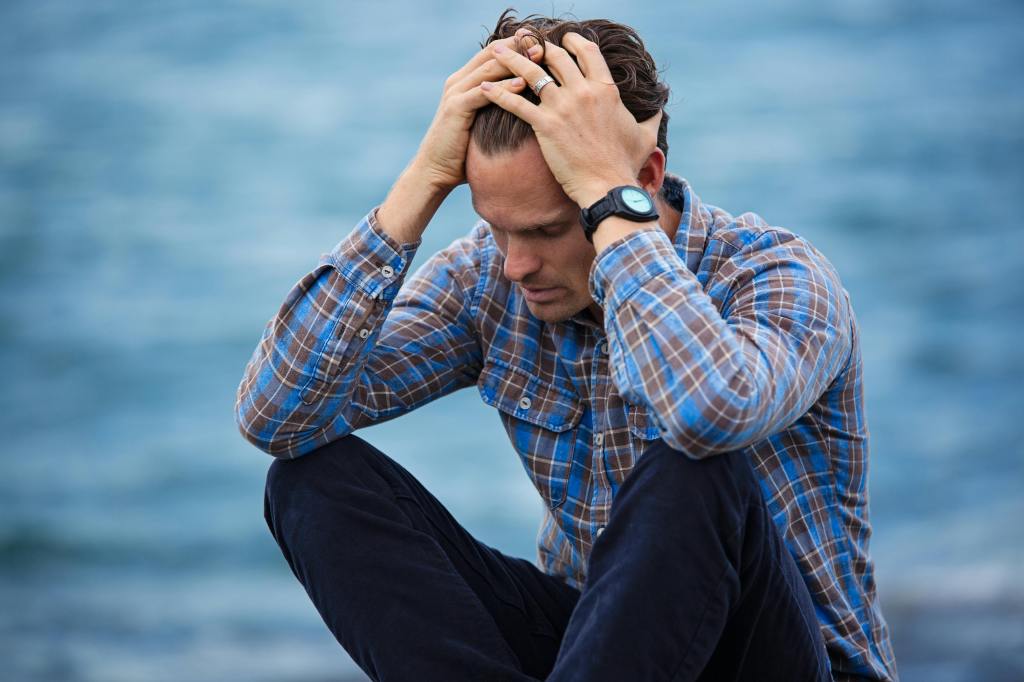
It’s not easy to be a man in today’s world. The more we are moving towards self-actualisation as a society or taking a step towards awareness. It’s becoming more and more difficult for men to choose sides.
The internet is filled with polarising opinions and young men are lost. They are not able to understand whether to go stoic and hide their feelings or be expressive and be called less of a man by society.
Read 10 more struggles that modern men are facing at the moment.
Depression
I would never say that depression is a gender-specific struggle but as a society, we often look over depression among men. Since men don’t express their agony frequently, you will never get to know whether they are depressed or not. But if you look close enough you can see some signs.
According to a Men’s Health article published in 2018, about 6 million men suffer from depression and about 3 million people suffer from anxiety. As per the same article, the male suicide rate is so high that it can be called a silent epidemic.
Even though women attempt more suicide. The rate of completing the task is higher in men than in women. In June 2011, Harvard University reported that a significant physical concern for men with depression is cardiovascular disease.
Dr William Pollack, a Harvard Psychologist says in his report that, “Boys are trained in ways that make it likely they get depression later. If it doesn’t destroy their relationship sooner, it shows up by midlife. Midlife crisis is a euphemism for male-based depression.”
Also read: 10 main causes of depression.
Loneliness
In his book, called “Lonely at the Top”, Thomas Joiner mentions that men have made a Dorian Grey, like trade of success in the external world for a deep sense of loneliness, emptiness, and disconnection.
He continues, “Boys start out feeling just as connected in their close relationships as girls do, but they tend to neglect their relationships to pursue external success.”
You might have observed this pattern on social media and pop culture. Lonely men are often shown under the heroic spotlight and their agony becomes the main plot of the movie. Movies like Blade Runner, American Psycho, and the contents of the red-pill podcasts often concentrate on “or and either” narrative.
If you want to be successful, you have to be lonely. If you are pursuing success, you cannot be distracted by women or personal relationships. Even though this mindset is extremely toxic in the long run, men often fall prey to loneliness.
Also read: 10 signs you are lonely, not depressed.
Not being able to find a romantic partner.
From a societal perspective, it is necessary for men to find a romantic partner. Men who have a girlfriend or a certain kind of girlfriend are often looked upon in a different light than men who are single. And that makes men desperate for a romantic partner or feel less when they don’t have one.
Many men often try their best to find a romantic partner, and sometimes their only hope is dating apps. However, the algorithms on these apps do not make it easy for them to find a partner.
It has been statistically proven that these apps strategically gatekeep the options or the male-to-female ratio has a wider difference. Also, there is more competition in a smaller pool which makes it difficult for the prospects to succeed.
The Male population also gets discouraged from pop culture or mainstream news and social media narratives. The stories about women like certain types of guys with certain attributes make men hopeless about getting a partner. Sometimes they get so discouraged that they don’t even want to try.
Also read: 10 ways to improve your Confidence.
Issues with body image/ body dysmorphia
In mainstream media, body image issues are often attributed to women. Words like body positivity and body acceptance are also targeted towards the female population.
A person with body dysmorphia disorder is overly preoccupied with what are perceived as gross imperfections in their appearance and spends an hour or more every day thinking about the way they look.
When 2.4 percent of adults in the US have body dysmorphic disorder. Statistically, body dysmorphia prevails 2.5 percent among women and 2.2 percent among men.
Since men consider their bodies as one of the defining traits. They often obsess over it and try to perfect it. Often leading to unhealthy practices and over-exertion during exercise or daily habits.
In a 2017 report, Mc Creary mentioned, “Research shows that men feel worse about their physical appearance after taking in the idealized, hyper-muscular imagery typically found on Instagram.
Also read: 9 ways to save your Mental Health while online dating.
Societal standards
According to a Honolulu-based psychologist, Wayne Giancaterino, “Men are caught in a vicious cycle: they adhere to societal expectations that emotions matter less to men, so their emotions are not attended to. Men are so sensitive that they unplug from their emotional lives.”
If there have been stern standards for women in society, there are also some societal expectations for men. “Men don’t cry”, “Be a man”, “Toughen up”, and “Man-up”, are some of the phrases that are used by boys and men to define what it means to be a man.
Men’s abuse in a relationship or childhood abuse is often looked through a different lens by society and it is not healthy. This makes men lonely, succumbing to their toxic feelings, falling into a hole, and incapable of asking for help. Because they have been taught from an early age that any show of emotions or vulnerability has failing consequences that they tie to their self-esteem.
Men are often seen to remain quiet when it comes to facing any kind of abuse in a relationship. Like in the case of Richard Spencer who suffered abuse from his wife for almost 2 decades.
Unable to ask for help.
There has always been a lingering shame among men who ask for any kind of assistance whether it comes to physical ailments or mental and emotional issues. But men often forget that they are also humans and bottling their emotions especially if they are negative cannot only affect them mentally but also physically.
When men try to avoid help and succumb to other mental health issues, they are more vulnerable to self-destructive behaviors. Over-eating, anger issues, or having relationships outside traditional relationships could be some of the coping mechanisms that men often resort to.
Some men have also experienced society’s negative reactions when they ask for help, so they eventually stop to speak about how they feel. Others might not have a fulfilling emotional upbringing to comprehend their emotions and hence they never understand how and why they are feeling the way they are feeling. So, asking for help becomes a far-fetched thought for them.
Also read: 10 signs you have “Saviour Complex”.
Lack of empathy among men.
Geoffrey Greif did research among 400 men and 120 women about how they define friendships. Through his findings he mentions,
“Men, from an early age, are socialized by society to have difficulty establishing and maintaining friendships. We have been raised to compete with other men and not cooperate with them. We have been raised to compete with our vulnerabilities and have often lacked friendship role models in our fathers.”
This says a lot about male intimacy. How this emotion is imbibed in men, and how they perceive it later. But they are human too, and once they realize they are lacking intimacy, they don’t know how to ask for it.
You can read more about it here: The intimacy drought among men.
Not being able to express themselves.
The previous point leads to a much bigger problem among men. Since emotional intelligence has never been introduced to them since childhood, they barely understand their emotions. Or when they do, they don’t know how to express them or show them.
Since they have been perceived in society in a certain way, it is hard for them to understand who would understand their emotions and what words to use to express them.
The kind of conversations among men also do not encourage them to express themselves to each other in a more comprehensible way. And if they ever express themselves, they step back because of the judgment they endure.
Being Judged.
Long gone are the days when only women were judged in the society. Nowadays, men are equally criticized when they show “weakness”.
They are objectified equally as women, though it is an unpopular topic right now.
Men barely ask for help but when they do they immediately face harsh criticism and judgment from society.
No wonder they take a step back and decide to never open up. This event not only becomes toxic for them but for anyone around them who can support them and look at them with empathy.
Conclusion
It is time to get over labels and understand men as humans. They too have emotions and need enough space to open up about their struggles.
The polarising society is doing no benefit to either men or women. It is just making the society unliveable.
What other struggles would you like to add to the list?
 Panache
Leave a comment